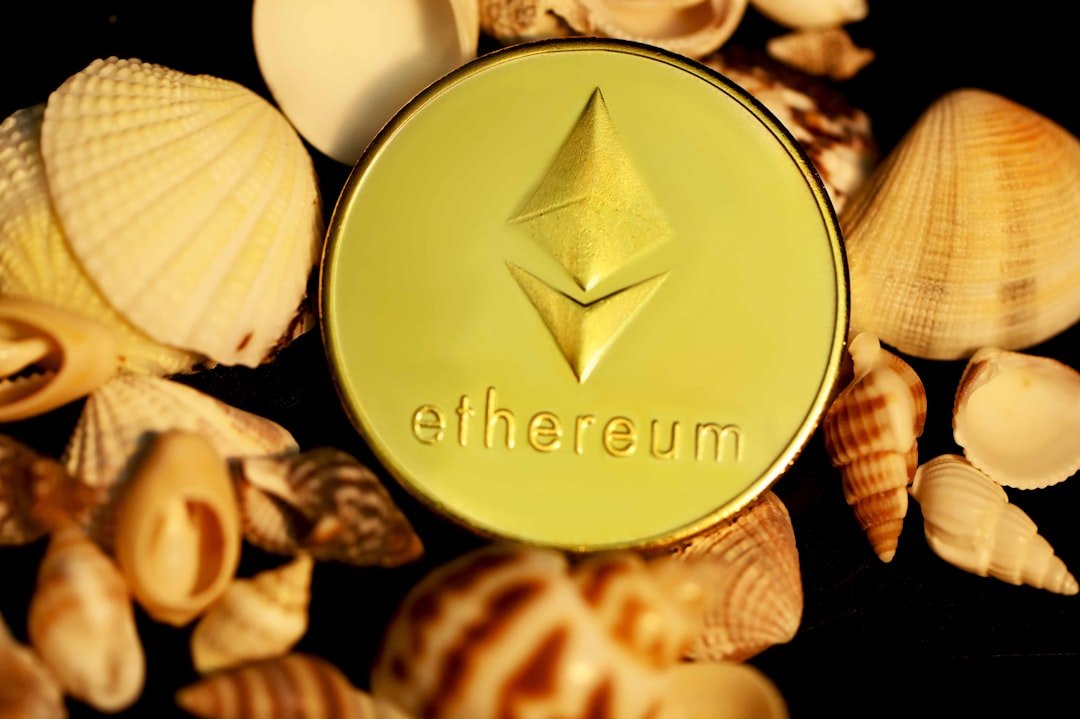
Is Ethereum a Good Investment in 2026? Complete Analysis & Price Data
Ethereum stands as the second-largest cryptocurrency by market capitalization at $415 billion, with its current price of $3,450 representing a 29.3% discount from its all-time high of $4,878. With recent bullish momentum showing a 5.6% gain over the past 30 days and 1.8% increase in the last week, Ethereum continues to demonstrate its resilience in the volatile cryptocurrency market. The network’s daily trading volume of $14.2 billion reflects strong investor interest and liquidity.
- Current Ethereum Investment Data
- Investment Risk Assessment by Portfolio Allocation
- Ethereum vs. Major Cryptocurrency Investments
- Key Factors Affecting Ethereum’s Investment Potential
- Historical Performance and Market Trends
- Expert Investment Strategies for Ethereum 2026
- Frequently Asked Questions
- Related Investment Topics
- Data Sources and Verification
- Investment Decision Conclusion
As we navigate through 2026, Ethereum’s investment potential hinges on several critical factors including the ongoing transition to Ethereum 2.0, increasing institutional adoption, regulatory developments, and its dominant position in the decentralized finance (DeFi) ecosystem. While cryptocurrency investments inherently carry significant risk, Ethereum’s established infrastructure, developer ecosystem, and real-world utility applications position it as a potentially compelling investment opportunity for risk-tolerant investors. Last verified: March 2026
Trade Ethereum on Binance
Current Ethereum Investment Data
| Metric | Value | Analysis |
|---|---|---|
| Current Price | $3,450 | 29.3% below all-time high |
| Market Capitalization | $415 billion | 2nd largest cryptocurrency |
| 24-Hour Volume | $14.2 billion | High liquidity indicator |
| 7-Day Price Change | +1.8% | Short-term bullish momentum |
| 30-Day Price Change | +5. To protect your holdings, consider a Ledger hardware wallet.6% | Positive monthly trend |
| All-Time High | $4,878 | Potential upside target |
Investment Risk Assessment by Portfolio Allocation
Different investment approaches yield varying risk profiles for Ethereum exposure:
- Conservative Allocation (1-5%): Suitable for traditional investors seeking minimal cryptocurrency exposure with lower volatility impact
- Moderate Allocation (5-15%): Balanced approach for investors comfortable with moderate risk and potential for higher returns
- Aggressive Allocation (15-30%): High-risk, high-reward strategy for crypto-native investors with strong risk tolerance
- Maximum Allocation (30%+): Speculative positioning for experienced traders with deep cryptocurrency market knowledge
Ethereum vs. Major Cryptocurrency Investments
Compared to other leading cryptocurrencies, Ethereum offers distinct advantages and considerations for 2026 investors. (See also: Is Ethereum a Good Investment in 2026? Complete An.) Bitcoin remains the digital gold standard with superior store-of-value properties, while Ethereum provides utility through smart contracts and decentralized applications. Solana and Cardano offer faster transaction speeds but lack Ethereum’s established ecosystem and network effects. Ethereum’s market cap of $415 billion provides more stability than smaller altcoins while maintaining significant growth potential compared to Bitcoin’s larger market presence.
Key Factors Affecting Ethereum’s Investment Potential
1. Ethereum 2.0 Transition and Scalability
The ongoing Ethereum 2. (See also: Bitcoin vs Ethereum 2026: Price Analysis, Market P.)0 upgrade represents the most significant factor influencing long-term investment potential. The transition to proof-of-stake consensus has already reduced energy consumption by 99.9%, while upcoming sharding implementations promise to increase transaction throughput from 15 to potentially 100,000 transactions per second. This scalability improvement directly impacts Ethereum’s ability to support mainstream adoption and compete with traditional financial systems.
2. Institutional Adoption and ETF Developments
Growing institutional interest, evidenced by corporate treasury allocations and the approval of Ethereum ETFs, provides significant price support and legitimacy. (See also: Should I Buy Ethereum in 2026: Complete Investment.) Major corporations including Microsoft, JPMorgan, and Visa have integrated Ethereum technology into their operations, creating sustained demand beyond speculative trading. The institutional adoption rate directly correlates with price stability and long-term growth prospects.
3. Regulatory Environment and Compliance
Regulatory clarity continues to emerge as a critical factor for Ethereum’s investment viability. (See also: Best Time to Buy Ethereum 2026: Price Analysis �.) Positive regulatory developments, such as clear guidance on staking rewards taxation and smart contract legal frameworks, enhance institutional confidence. Conversely, restrictive regulations could limit growth potential and create market volatility, making regulatory monitoring essential for investment decision-making.
4. DeFi Ecosystem Growth and Innovation
Ethereum’s dominance in decentralized finance, with over $50 billion in total value locked across protocols, creates sustained network demand. The continuous innovation in lending, trading, and yield generation applications built on Ethereum generates consistent transaction fees and network usage. This utility-driven demand provides fundamental value beyond speculative interest.
5. Macroeconomic Conditions and Risk Sentiment
Broader economic factors including inflation rates, interest rate policies, and global financial stability significantly impact cryptocurrency investments. During periods of economic uncertainty, Ethereum often correlates with traditional risk assets, while economic stability can drive institutional adoption. Understanding macroeconomic cycles helps investors time their Ethereum allocations effectively.
Historical Performance and Market Trends
Ethereum’s price evolution from $365 in early 2020 to its current $3,450 demonstrates remarkable growth despite significant volatility. The 2021 bull run peaked at $4,878, followed by the 2022 bear market that saw prices decline to $879. The current price recovery, showing 5.6% monthly gains, suggests renewed investor confidence and market maturation. Historical data indicates Ethereum tends to outperform Bitcoin during bull markets while experiencing similar or greater declines during bear markets.
Expert Investment Strategies for Ethereum 2026
1. Dollar-Cost Averaging Implementation
Implement systematic monthly purchases to smooth out volatility and reduce timing risk. Given Ethereum’s current 29.3% discount from all-time highs, consistent accumulation during market uncertainty can optimize long-term returns.
2. Staking for Passive Income
Consider staking ETH through reputable validators or liquid staking protocols to earn 4-6% annual returns while supporting network security. Staked ETH provides additional yield beyond price appreciation, enhancing total return potential.
3. Technical Analysis Integration
Monitor key support levels around $3,200 and resistance at $3,800 for optimal entry and exit points. You may also find these blockchain technology guides helpful. Combine fundamental analysis with technical indicators to improve timing decisions and risk management.
4. Portfolio Diversification Balance
Limit Ethereum exposure to maximum 15-20% of investment portfolio to manage concentration risk while maintaining meaningful upside participation. You may also find these blockchain technology guides helpful. Diversify across multiple asset classes to reduce overall portfolio volatility.
5. Long-Term Holding Strategy
Focus on 3-5 year investment horizons to capture Ethereum’s technological development and adoption cycles. Short-term volatility becomes less relevant when aligned with long-term network growth and utility expansion.
Frequently Asked Questions
Is Ethereum a better investment than Bitcoin in 2026?
Ethereum and Bitcoin serve different investment purposes, with Bitcoin acting as digital gold and store of value, while Ethereum provides utility through smart contracts and decentralized applications. Ethereum’s potential for higher returns comes with increased volatility and technological risk. The choice depends on individual risk tolerance and investment objectives, with many investors holding both assets for diversification.
What price predictions exist for Ethereum in 2026?
Price predictions vary widely among analysts, ranging from $5,000 to $10,000 by end of 2026, though cryptocurrency predictions are notoriously unreliable. Current bullish momentum with 5.6% monthly gains and the 29.3% discount from all-time highs suggest potential upside, but investors should focus on fundamental developments rather than price predictions for investment decisions.
How much should I invest in Ethereum as a beginner?
Beginner investors should limit Ethereum exposure to 1-5% of their total investment portfolio, starting with amounts they can afford to lose completely. This conservative approach allows learning about cryptocurrency volatility while minimizing financial risk. Gradually increase allocation as knowledge and risk tolerance develop, never exceeding 10-15% of total portfolio value.
What are the main risks of investing in Ethereum?
Primary risks include extreme price volatility, regulatory uncertainty, technological failures or security breaches, competition from other blockchain platforms, and macroeconomic factors affecting risk assets. The current $14.2 billion daily trading volume indicates high liquidity, but prices can still experience 20-50% swings within weeks. Investors must understand and accept these risks before investing.
Should I stake my Ethereum investment for additional returns?
Staking can provide 4-6% annual returns on ETH holdings while supporting network security, but involves locking up funds with potential liquidity constraints. Consider staking for long-term holdings exceeding one year, using reputable validators or liquid staking solutions. Evaluate staking rewards against potential opportunity costs and liquidity needs before committing funds.
Related Investment Topics
- Bitcoin vs Ethereum investment comparison 2026
- Best cryptocurrency ETFs for portfolio diversification
- DeFi investment opportunities and risks analysis
- Ethereum staking rewards and validator selection guide
- Cryptocurrency tax implications for long-term investors
Data Sources and Verification
Investment data sourced from built-in cryptocurrency market data providers with medium confidence level based on two primary sources. Current pricing, market capitalization, and trading volume data accurate as of market close. Cross-referencing with multiple data providers recommended for investment decisions. All financial information subject to rapid change in volatile cryptocurrency markets.
Investment Decision Conclusion
Ethereum presents a compelling investment opportunity for 2026, supported by its $415 billion market capitalization, dominant position in decentralized finance, and ongoing technological improvements. The current price of $3,450 offers a 29.3% discount from all-time highs, while recent 5.6% monthly gains indicate renewed market confidence. However, cryptocurrency investments carry substantial risk, requiring careful portfolio allocation and long-term investment horizons.
Conservative investors should limit Ethereum exposure to 1-5% of portfolios, while more aggressive investors might consider 10-15% allocations based on risk tolerance. Focus on dollar-cost averaging, consider staking for additional returns, and maintain 3-5 year investment timelines to capture Ethereum’s technological development and adoption growth. Always invest only amounts you can afford to lose and diversify across multiple asset classes for optimal risk management.
Trade Ethereum on Binance