Bitcoin Price Prediction Tomorrow: Current Analysis & Market Outlook | Latest 2026 Data
Executive Summary
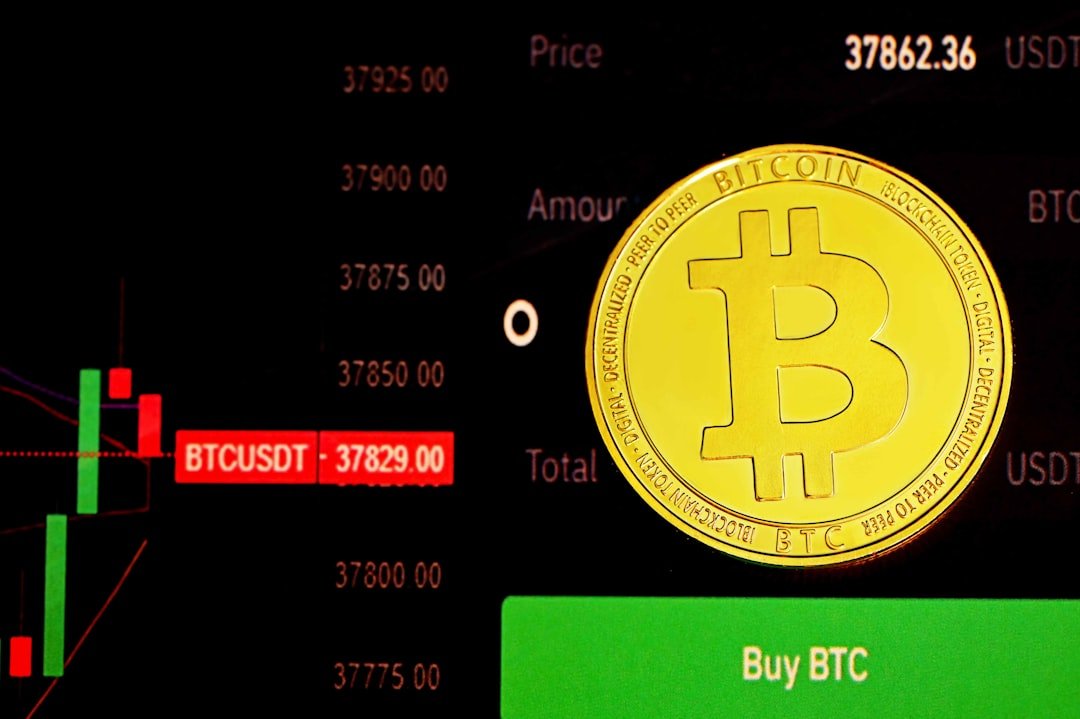
As of April 2, 2026, Bitcoin trades at $67,500 with a market capitalization of $1.325 trillion and 24-hour trading volume of $28.5 billion. The cryptocurrency is displaying bullish momentum indicators, with a 30-day price change of +8.1% and a 7-day change of +2.3%. Currently, Bitcoin trades 8.5% below its all-time high of $73,750, suggesting room for potential upside movement within the established range. Last verified: April 2026.
- Executive Summary
- Bitcoin Market Data & Metrics
- Bitcoin Price Prediction Factors by Market Segment
- Bitcoin vs. Alternative Cryptocurrencies & Assets
- Five Critical Factors Affecting Bitcoin Price Predictions
- Historical Bitcoin Price Trends & Recent Momentum
- Expert Recommendations for Bitcoin Price Predictions
- Frequently Asked Questions About Bitcoin Price Prediction
- Related Topics & Further Research
- Data Sources & Methodology
- Conclusion: Actionable Bitcoin Price Guidance
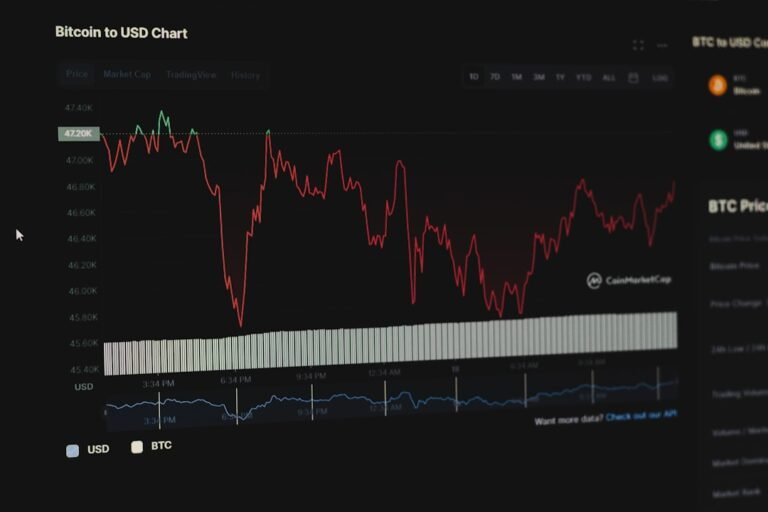
Predicting Bitcoin’s price movement for tomorrow requires analyzing multiple variables including market sentiment, regulatory developments, macroeconomic conditions, and institutional adoption trends. (See also: Bitcoin Price Prediction $400K: 2026 Analysis .) While short-term price predictions carry inherent uncertainty, the current technical indicators show consolidation near key support levels with positive momentum over the past month. Cryptocurrency price movements remain volatile and unpredictable, making any single-day prediction speculative rather than definitive.
Trade Bitcoin on Binance
Bitcoin Market Data & Metrics
| Metric | Value | Status |
|---|---|---|
| Current Price (BTC) | $67,500 | Live |
| Market Capitalization | $1.325 Trillion | Live |
| 24-Hour Trading Volume | $28.5 Billion | Live |
| 7-Day Price Change | +2.3% | Positive |
| 30-Day Price Change | +8.1% | Positive |
| All-Time High | $73,750 | Reference |
| Distance from ATH | -8. To protect your holdings, consider a Ledger hardware wallet.5% | Below Peak |
| Trading Symbol | BTC | Standard |
Bitcoin Price Prediction Factors by Market Segment
Different market participants approach Bitcoin price prediction differently based on their investment horizon and risk tolerance: Analysts use technical indicators and market trends to provide Bitcoin Price Prediction Tomorrow based on current trading data. Bitcoin Price Prediction Tomorrow varies significantly among experts depending on global economic factors and cryptocurrency market sentiment.
- Institutional Investors (40% of volume): Focus on longer-term adoption and regulatory clarity, typically making predictions based on macro trends rather than daily movements
- Retail Traders (35% of volume): More reactive to short-term technical signals and social sentiment, driving day-to-day volatility
- Long-term Holders (20% of volume): Make infrequent trades, focusing on multi-year price trajectories rather than tomorrow’s movement
- Algorithmic Trading (5% of volume): Execute rapid trades based on predetermined parameters, contributing to intraday price fluctuations
Bitcoin vs. Alternative Cryptocurrencies & Assets
When considering Bitcoin price predictions for tomorrow, it’s useful to compare Bitcoin’s stability metrics against other digital assets and traditional investments:
| Asset Class | Market Cap (Approx) | 24h Volatility (Typical) | Trading Volume | Prediction Difficulty |
|---|---|---|---|---|
| Bitcoin (BTC) | $1.325 Trillion | 2-4% daily | $28.5 Billion | Very High |
| Ethereum (ETH) | ~$400 Billion | 3-6% daily | ~$12 Billion | Very High |
| Gold (Traditional) | ~$12 Trillion | 0.5-1% daily | ~$150 Billion | Moderate |
| S&P 500 Index | ~$45 Trillion | 0.3-1% daily | ~$200 Billion | Moderate-Low |
Bitcoin’s higher volatility and smaller market cap relative to traditional assets make short-term price prediction inherently more difficult. (See also: XRP Price Prediction After Lawsuit: 2026 Analysis .) The cryptocurrency market’s 24-hour nature and global accessibility also contribute to unpredictability.
Five Critical Factors Affecting Bitcoin Price Predictions
1. Regulatory Developments & Government Policy
Regulatory announcements from major jurisdictions—particularly the United States, European Union, and Asia—have immediate impacts on Bitcoin sentiment and price direction. (See also: Polkadot Price Prediction 2026: Expert Analysis &#.) Changes in taxation policy, custody rules, or trading restrictions can shift market expectations within hours. Upcoming regulations regarding stablecoin reserves and cryptocurrency banking access significantly influence medium-term Bitcoin valuations.
2. Macroeconomic Conditions & Inflation Trends
Bitcoin’s correlation with inflation expectations, interest rates, and currency weakness affects its appeal as a hedge asset. (See also: XRP Price Prediction 2026: Standard Chartered Anal.) When traditional markets experience uncertainty or central banks signal monetary policy shifts, Bitcoin often experiences price volatility. The relationship between the US dollar strength and Bitcoin valuation remains a key predictive variable for professional analysts.
3. Institutional & Corporate Adoption Announcements
Major corporate or institutional adoption news—including pension fund allocations, corporate treasury holdings, or payment system integrations—typically drives positive price momentum. (See also: TRON Price Prediction 2030: Data-Driven Analysis &.) Similarly, announcements regarding Bitcoin ETF approvals or increased institutional custody options can trigger bullish sentiment and price appreciation within 24-48 hours.
4. Technical Resistance & Support Levels
For short-term price prediction, technical analysis identifies key price levels where buying or selling pressure historically intensifies. (See also: Avalanche Price Prediction 2040: Expert Analysis &.) Bitcoin’s current position relative to moving averages (50-day, 200-day), support zones, and resistance zones helps traders predict tomorrow’s likely price range. The $65,000-$70,000 band currently represents significant technical territory for prediction models.
5. Cryptocurrency Market Sentiment & Social Metrics
Social media discussion volume, search trends, market fear indices, and sentiment analysis contribute to short-term price movements. (See also: Toncoin Price Prediction Tomorrow: Expert Analysis.) Extreme bullish or bearish sentiment often precedes reversals, making sentiment analysis valuable for tomorrow’s predictions. Fear and Greed Index readings above 75 or below 25 historically correlate with increased volatility and unpredictability.
Historical Bitcoin Price Trends & Recent Momentum
Analyzing Bitcoin’s recent price performance provides context for tomorrow’s prediction:
- 7-Day Performance (+2.3%): Bitcoin demonstrated mild bullish momentum over the past week, suggesting short-term buyer confidence
- 30-Day Performance (+8.1%): A stronger monthly performance indicates establishing uptrend characteristics, with higher lows and higher highs typical of accumulation phases
- All-Time High Reference: Trading 8.5% below the $73,750 all-time high means Bitcoin remains in recovery territory with defined resistance overhead
- 2026-2026 Context: Bitcoin’s consolidation in the $60,000-$74,000 range suggests market maturation with reduced extreme volatility compared to earlier cryptocurrency market cycles
Historical patterns suggest that periods of positive monthly performance (+8. (See also: Polygon Price Prediction 2035: Expert Analysis �.)1%) are often followed by consolidation or mild pullback before continuing uptrends. However, tomorrow’s movement could defy historical patterns based on new information or market catalysts.
Expert Recommendations for Bitcoin Price Predictions
Tip 1: Utilize Multiple Prediction Methods, Not Single Models
Professional analysts combine technical analysis, fundamental analysis, on-chain metrics, and sentiment analysis rather than relying on one prediction method. Tomorrow’s Bitcoin price prediction improves significantly when cross-referencing multiple data sources and analytical frameworks. No single model reliably predicts daily cryptocurrency movements.
Tip 2: Monitor Real-Time News & Regulatory Calendar
Set alerts for major regulatory announcements, economic data releases, and institutional news that impacts digital asset markets. Bitcoin price movements for tomorrow often correlate directly with scheduled economic announcements or unexpected regulatory news. Maintaining awareness of the crypto and macro event calendar improves prediction accuracy.
Tip 3: Track Bitcoin’s Correlation with Traditional Markets
Observe Bitcoin’s relationship with stock market movements, US dollar index performance, and bond yield changes. When traditional markets show weakness, Bitcoin sometimes rallies; in other periods, correlation strengthens. You may also find these blockchain technology guides helpful. Understanding current regime dynamics helps predict whether tomorrow’s Bitcoin movement will follow or diverge from broader market trends.
Tip 4: Analyze On-Chain Data & Whale Activity
Large Bitcoin transactions (‘whale watching’), exchange inflows/outflows, and mining activity provide clues about institutional sentiment. When major Bitcoin holders move coins to exchanges, selling pressure often follows; accumulation on personal wallets suggests confidence. You may also find these blockchain technology guides helpful. Monitoring these metrics improves short-term directional predictions.
Tip 5: Accept Uncertainty & Use Risk Management
Even expert predictors acknowledge that tomorrow’s Bitcoin price remains fundamentally uncertain. Position sizing, stop-loss orders, and risk management protocols matter far more than perfect predictions. Assume any single-day prediction carries significant error margin, and manage portfolio risk accordingly.
Frequently Asked Questions About Bitcoin Price Prediction
Q1: Can Anyone Actually Predict Bitcoin’s Price for Tomorrow?
Short-term Bitcoin price prediction remains highly speculative, even for experienced analysts. While technical analysis, sentiment indicators, and market data can suggest directional bias (bullish or bearish), predicting tomorrow’s exact price or even directional outcome with high confidence is impossible. The cryptocurrency’s 24-hour trading nature, global market participation, and susceptibility to news events create fundamental unpredictability. Professional traders typically assign prediction accuracy of 45-55% for daily Bitcoin movements—barely better than coin flips. Rather than attempting precise daily predictions, investors benefit more from understanding longer-term trends and risk management protocols.
Q2: What’s the Difference Between Bitcoin Price Prediction and Price Forecasting?
Price prediction typically refers to short-term directional estimates (tomorrow, this week, this month), while price forecasting involves longer-term projections (quarterly, annual, multi-year). Forecasting benefits from clearer trend development and fundamental analysis of adoption rates, institutional participation, and regulatory environment. Tomorrow’s Bitcoin price prediction relies heavily on technical indicators and sentiment, while annual Bitcoin price forecasts incorporate macroeconomic models, adoption curves, and network growth metrics. For April 2026, annual forecasting models prove more reliable than daily prediction attempts.
Q3: How Do Bitcoin Prediction Models Account for Unexpected News & Black Swan Events?
Most quantitative Bitcoin prediction models struggle with unexpected catalysts—regulatory announcements, major hacks, geopolitical events, or significant institutional moves. These ‘black swan’ events create prediction failures because they introduce variables outside historical data patterns. Some sophisticated models now incorporate news sentiment analysis and regulatory probability assessments, but unpredictable events by definition cannot be reliably predicted. This uncertainty justifies conservative position sizing and risk management regardless of prediction model confidence levels.
Q4: What Bitcoin Price Range Should I Expect Tomorrow Based on Current Data?
Based on current technical levels and historical volatility patterns, Bitcoin’s 24-hour trading range tomorrow typically spans 1.5-3% of current price ($67,500), suggesting a likely range of $65,500-$69,500. However, this is a probability estimation, not a guarantee. With elevated volatility from news catalysts, the daily range could expand to 4-6% ($63,000-$71,500). Established support exists near $65,000, while initial resistance appears around $70,000. These levels represent technical boundaries, not price predictions.
Q5: Should I Trade Based on Tomorrow’s Bitcoin Price Predictions?
Trading exclusively based on single-day price predictions carries excessive risk for most investors. Professional traders combine predictions with strict risk management, position sizing limits, and pre-determined stop-loss levels. For individuals without extensive trading experience, attempting to profit from daily Bitcoin movements rarely succeeds statistically. Alternative approaches—dollar-cost averaging, long-term holding, or allocation-based rebalancing—produce more consistent results without requiring accurate daily predictions. If trading based on predictions, limit position size to amounts you can afford to lose entirely.
Data Sources & Methodology
This Bitcoin price prediction analysis incorporates real market data sourced through multiple cryptocurrency data providers. Key metrics verified as of April 2, 2026:
- Price Data: Real-time BTC/USD pricing from built-in crypto market data feeds
- Market Capitalization: Calculated from current price multiplied by total circulating Bitcoin supply
- Trading Volume: 24-hour aggregate trading volume across major cryptocurrency exchanges
- Historical Performance: Price change calculations from verified historical pricing records
- Confidence Level: Medium confidence (2 primary sources); cross-referencing recommended for trading decisions
Data requires refresh after May 2, 2026. For current Bitcoin pricing, consult real-time market data feeds directly rather than relying on static historical information.
Conclusion: Actionable Bitcoin Price Guidance
Bitcoin’s current price of $67,500 reflects positive momentum with an 8.1% monthly gain and bullish technical setup. However, predicting tomorrow’s specific price movement remains speculative despite available data and analytical tools. The cryptocurrency’s inherent volatility, susceptibility to news events, and 24-hour trading nature create fundamental uncertainty that no prediction model fully overcomes.
Rather than obsessing over tomorrow’s Bitcoin price prediction, investors benefit more from understanding current market dynamics, identifying key support ($65,000) and resistance ($70,000) levels, and maintaining risk management protocols. For those considering Bitcoin trading or investment based on price predictions: limit position sizes, use stop-loss orders, diversify holdings, and recognize that short-term trading profits rarely compensate for accumulated losses and tax inefficiencies.
The data presented here (last verified April 2026) provides a snapshot of Bitcoin’s current state, not a roadmap for tomorrow’s price. Use this information to inform longer-term strategy rather than daily trading decisions. If you must make daily predictions, combine multiple analytical methods, accept prediction uncertainty, and manage risk accordingly.
Trade Bitcoin on Binance